Serving homeowners across Coral SpringsIndependent water-treatment information & referral service
Coral Springs water system specialists

Better Water Starts With the Right System.

Coral Springs Water Filtration helps local homeowners compare whole-home filtration, softeners, reverse osmosis, and testing—without pushing a generic package. Your water provider, goals, and home determine the right starting point.

Local provider-awareTesting-first approachNo-obligation guidance
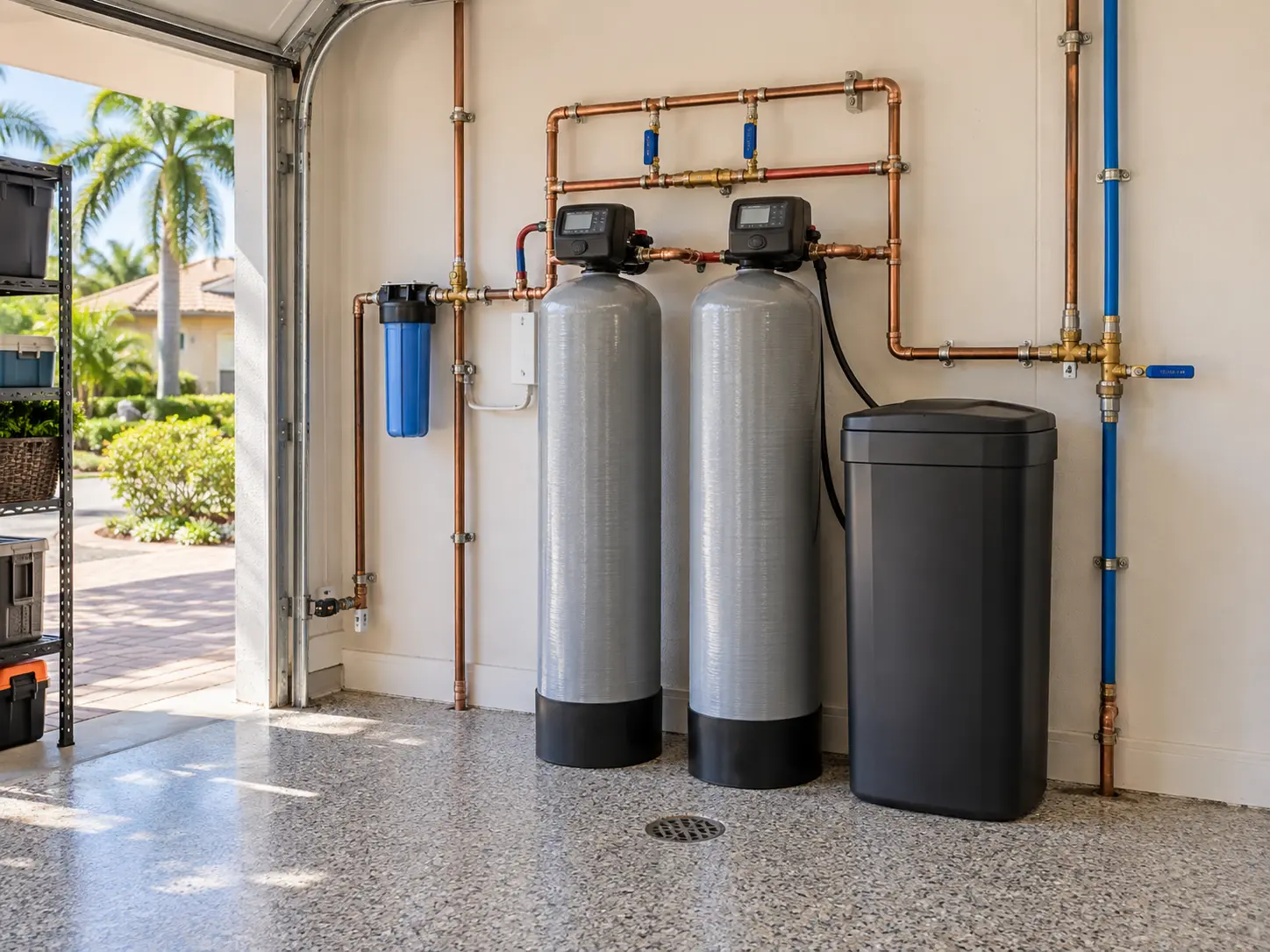
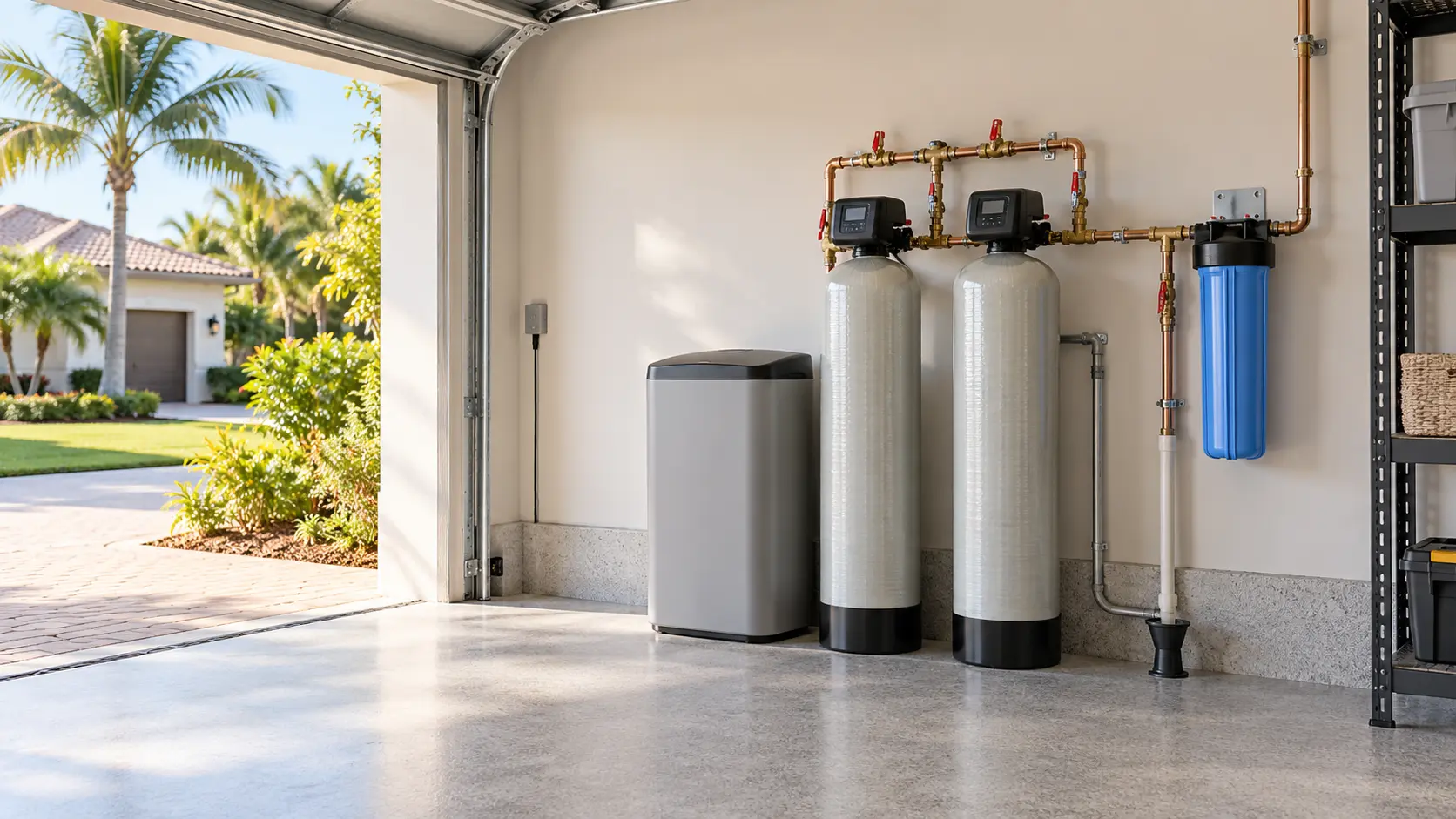
Modern whole-home water filtration and softening equipment installed in a clean residential garage
Made for real Florida homesSystem sizing • installation planning • maintenance
4 water providersOne city. Different starting points.
Whole-HomeFiltration
Spot-FreeSoftening
Better-TastingDrinking Water
Testing-FirstRecommendations
Free • 2 minutes • No obligation

Smart system finder

What’s happening with your water?

Choose what you notice. We’ll show you the most sensible category to research first—based on your goal and Coral Springs provider area.

✓ No scare tactics✓ No one-size-fits-all package✓ Built around your home

Educational guidance only. Testing confirms what your home actually needs.

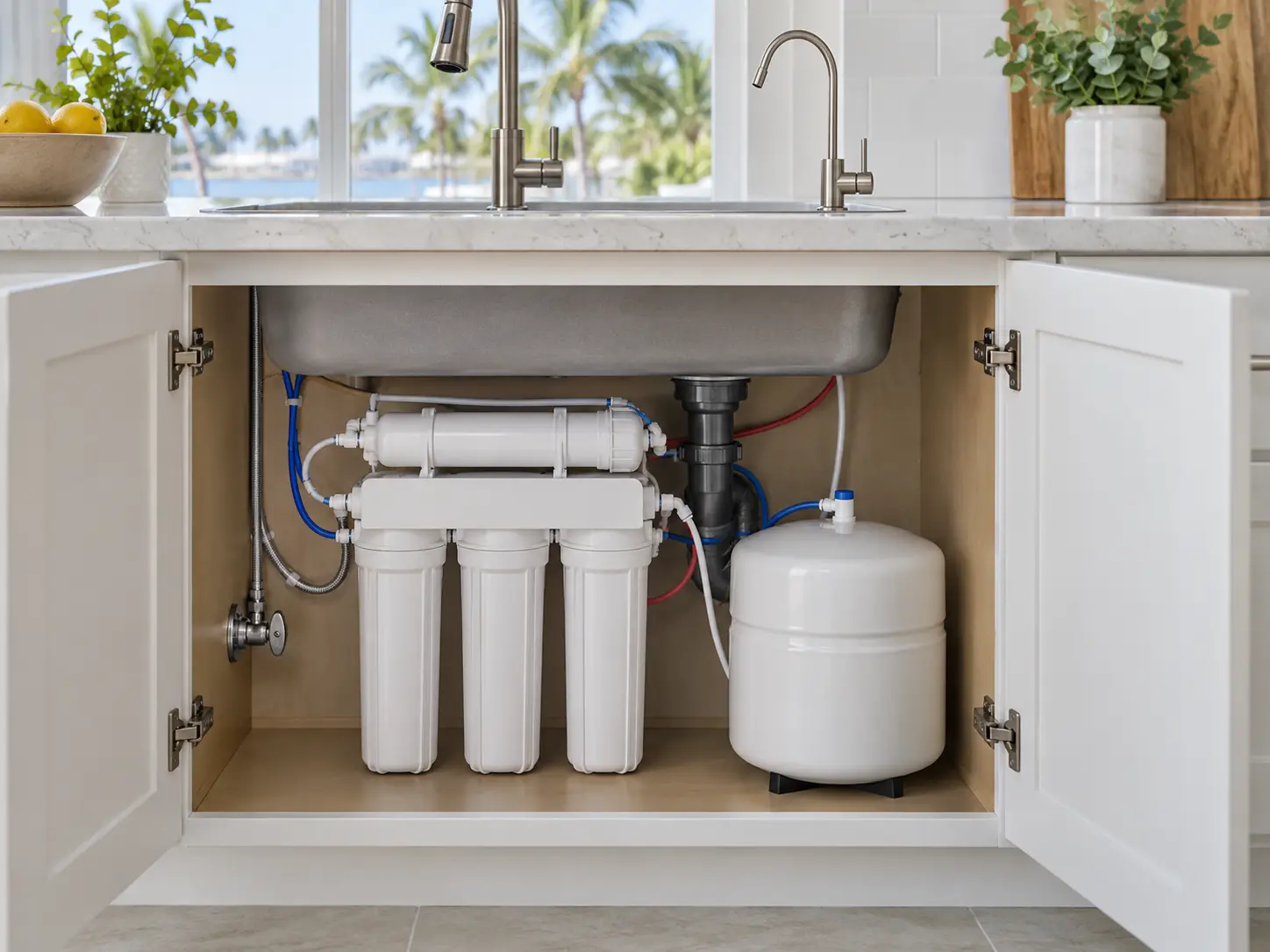
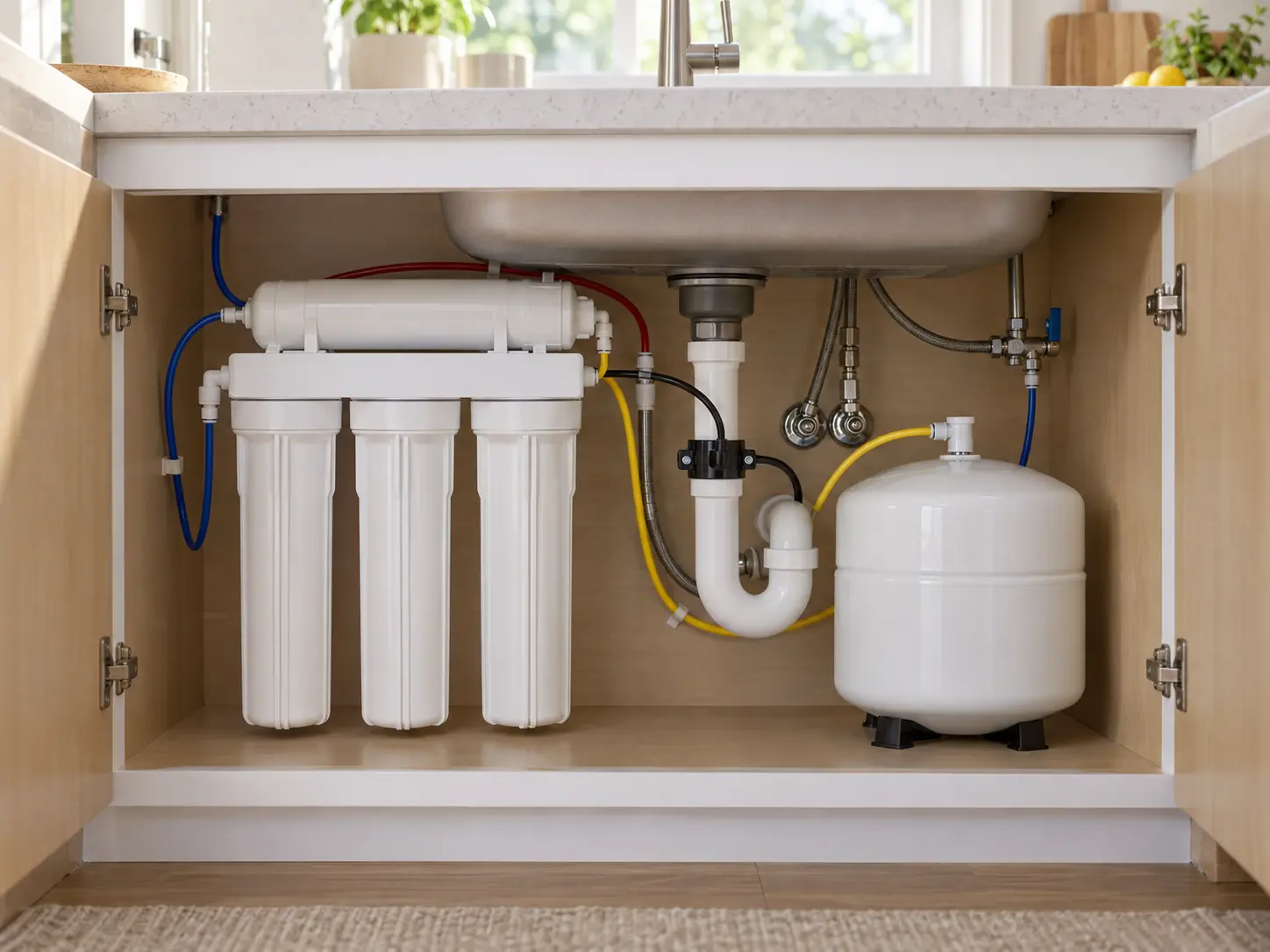
Modern under-sink reverse osmosis drinking water system
4utility provider areas
inside Coral Springs

Local knowledge matters

Your neighbor’s water may not be your water.

Coral Springs is served by four water providers: the City of Coral Springs, Coral Springs Improvement District, North Springs Improvement District, and Royal Water Works. A citywide assumption can therefore be wrong for an individual address. The City’s 2025 report identifies the Biscayne Aquifer as its source and describes lime softening, filtration, disinfection, and fluoridation. It reports that regulated drinking water met federal and state requirements. Home treatment should be discussed as a preference for taste, mineral scale, appliance protection, or point-of-use polishing—not as proof that compliant utility water is unsafe.

See the Coral Springs water guide
City of Coral SpringsCSIDNSIDRoyal Water Works

A clearer path to a decision

Know what you’re buying—and why.

Use your address, visible symptoms, household demand, and relevant measurements to compare equipment without the usual sales pressure.

01

Tell us what you noticeScale, taste, odor, staining, sediment, or drinking-water goals.

02

Test before you sizeMeasurements and plumbing conditions shape a responsible recommendation.

03

Compare the full planEquipment, installation, maintenance, certification claims, and ownership cost.

Request My Water Consultation
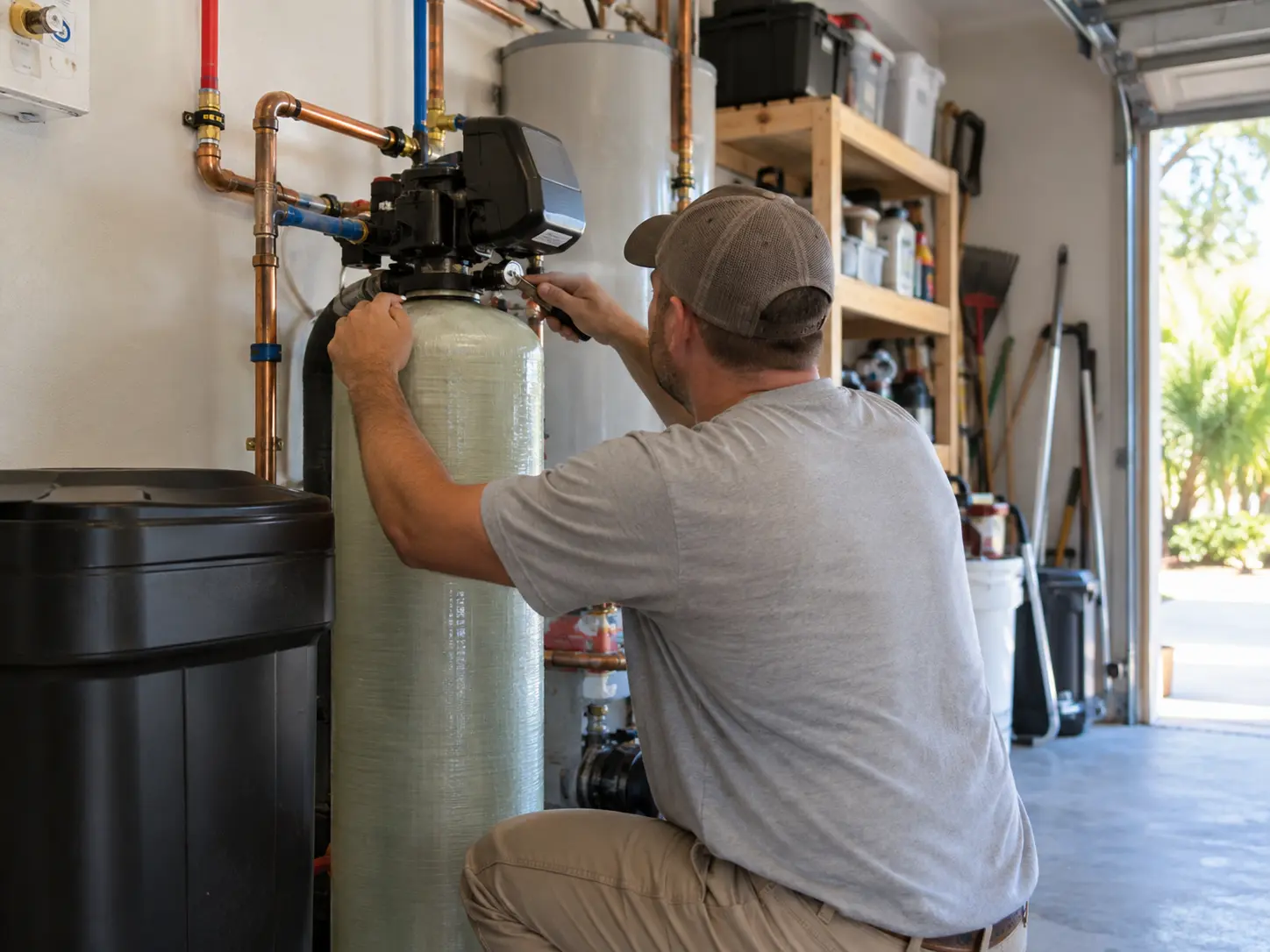
Water treatment technician servicing filtration tanks in a residential garageRealistic equipment. Clear expectations.

Budget before the appointment

What does water treatment cost in Coral Springs?

Short answer: many residential projects fall somewhere between a few hundred dollars for point-of-use equipment and several thousand dollars for installed whole-home treatment. The useful number depends on the measured water, household flow, plumbing access, equipment capacity, and maintenance plan.

Planning ranges—not advertised quotes. These ranges help you compare scope before speaking with an independent provider. The matched provider sets the actual equipment, price, warranty, and installation terms after reviewing the property.
Under-sink reverse osmosis drinking-water system in a bright Florida kitchen
Drinking-water focus$350–$1,500common planning range

Point-of-use filtration or RO

Designed mainly for drinking and cooking water at one sink. Cost changes with membrane capacity, pump requirements, storage, leak protection, faucet choice, refrigerator connection, and installation access.

  • Under-sink filtration or reverse osmosis
  • Dedicated faucet and storage where applicable
  • Initial filters and system startup
  • Possible refrigerator-line connection
Compare RO systems →
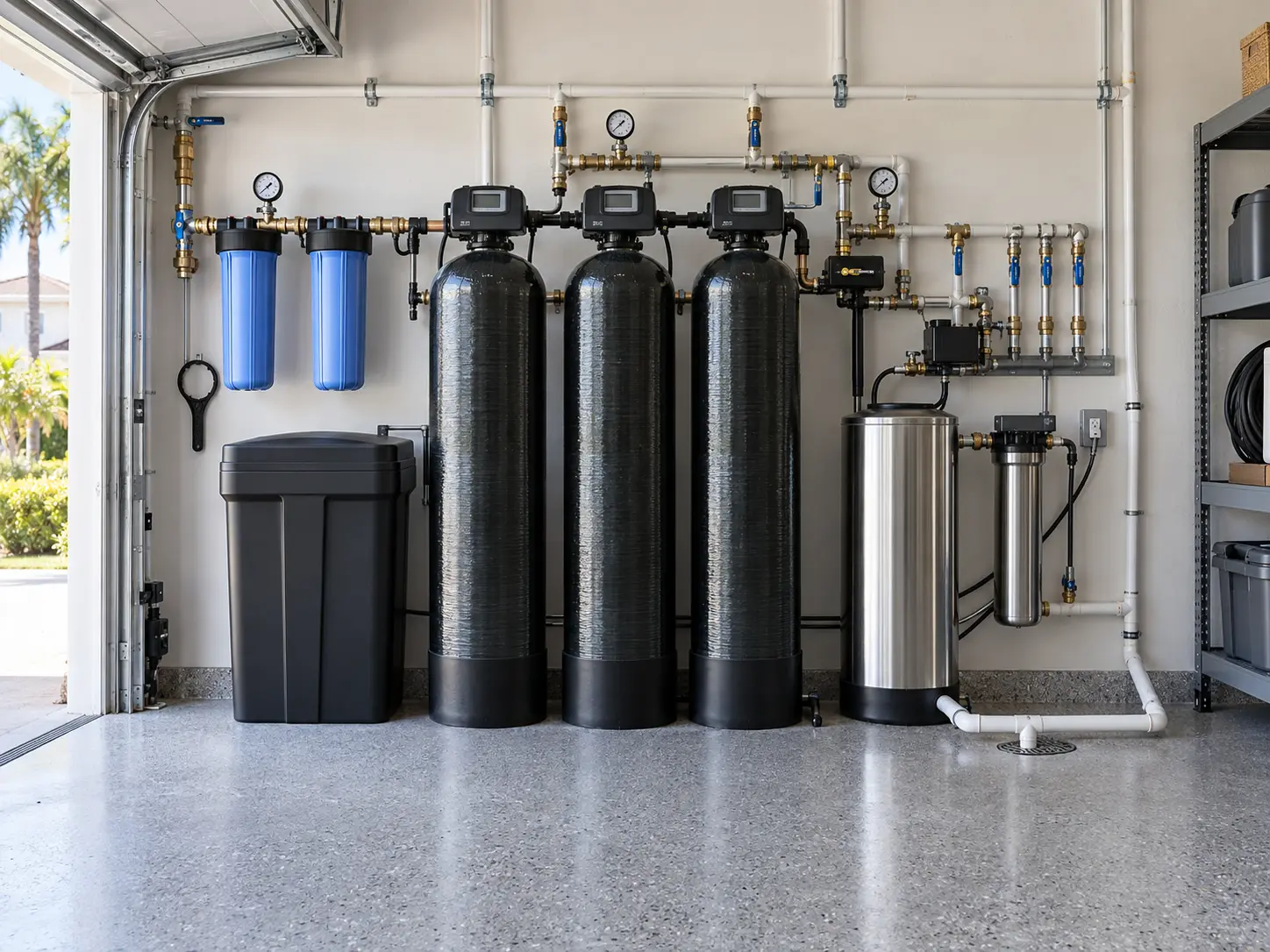
High-capacity multi-stage residential water-treatment equipment in a garage
Complex or high-capacity$5,000–$12,000+project-dependent range

Engineered or multi-stage treatment

Larger homes, difficult plumbing, private wells, documented iron or odor conditions, whole-home RO, storage, repressurization, or multiple specialty stages can require a custom design and laboratory evidence.

  • Multiple treatment vessels or specialty media
  • Higher service-flow requirements
  • Storage, pumps, electrical, or extra drainage
  • Verification testing and detailed service plan
Understand custom treatment →

How to compare two proposals fairly

Do not compare only the total price. Put the treatment objective, tank size, media type and volume, control valve, rated service flow, pressure loss, regeneration settings, certification claims, labor, permit responsibility, consumables, warranty exclusions, and expected service schedule side by side. A less expensive system may be the better fit; a larger system may be justified. The written specifications should explain why.

Inside the equipment

Different layers do different jobs.

Quick answer: a treatment train works by assigning a specific job to each stage. Pretreatment protects later components, adsorption media targets taste and disinfectant concerns, ion exchange addresses measured hardness, and reverse osmosis focuses on drinking water. More stages are not automatically better; every stage should have a stated purpose.

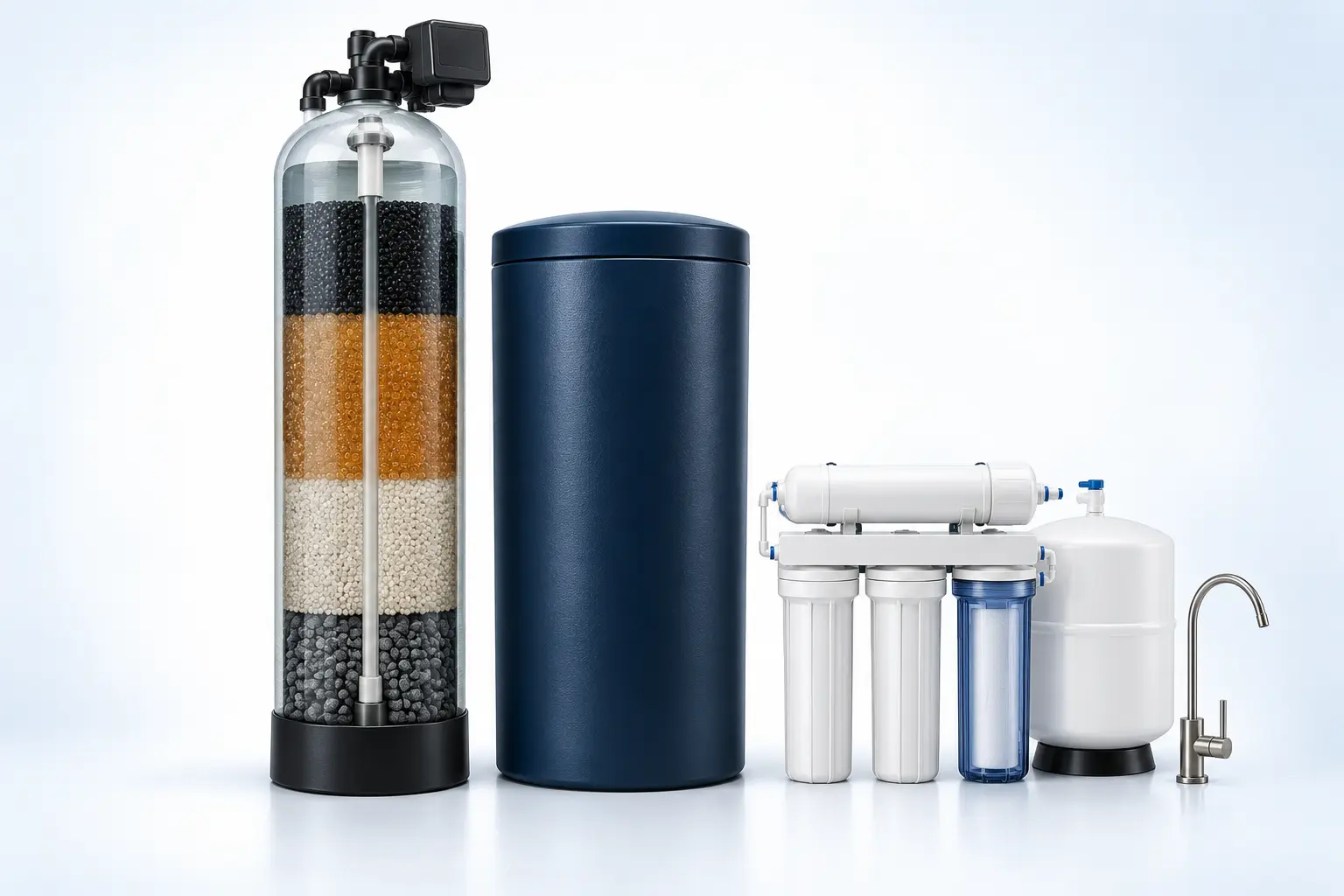
Illustrated cutaway showing carbon, ion-exchange resin, support media, gravel and an under-sink reverse-osmosis system1Metered controlRuns the programmed service and regeneration cycles according to system design and water use.2Adsorption mediaCarbon may be selected for chlorine, taste, odor, or other claims supported by the specific media and certification.3Ion-exchange resinReduces measured calcium and magnesium hardness when a true softener is part of the treatment plan.4Support bedGraded material helps distribute flow and supports the active media above it.
A

Protect the membraneSediment and carbon prefilters reduce particles and address substances that may shorten membrane life.

B

Separate dissolved materialThe RO membrane creates a treated stream and a concentrate stream. Performance depends on pressure, temperature, feed water, and membrane condition.

C

Store and deliverA tank or pump supplies useful faucet flow. Tubing layout and a refrigerator connection can change delivery performance.

D

Polish before the faucetA final carbon stage may refine taste. Remineralization is optional and should not be confused with contaminant reduction.

Important: This is an educational treatment-train illustration, not a representation of a specific product, installed system, or certified performance claim. Ask for the exact model, media, capacity, independent certification listing, and maintenance schedule in writing.

Direct answers for Coral Springs homeowners

What should you know before requesting a quote?

Coral Springs is not served by one uniform water provider. The City of Coral Springs, Coral Springs Improvement District, North Springs Improvement District, and Royal Water Works serve different areas. Confirm the name on the utility bill before using a water report or choosing treatment. A citywide average cannot replace an address-specific provider check or a measurement at the home.

For municipal water, homeowners commonly investigate chlorine or chloramine taste, mineral scale, spotting, soap performance, or a dedicated drinking-water tap. Those preferences do not mean compliant public water is unsafe. The City’s published report describes groundwater from the Biscayne Aquifer and a treatment process that includes lime softening, filtration, disinfection, and fluoridation. Other districts publish their own information, so the correct official source matters.

A responsible provider should connect each recommendation to a verified goal. If the goal is scale control, ask for a hardness result and the proposed softener settings. If the goal is taste or disinfectant reduction, ask which carbon media is proposed, how much is included, the household flow used for sizing, and what third-party certification supports the claim. If the goal is drinking water, compare point-of-use carbon and reverse osmosis based on the substances of concern, available pressure, storage, reject-water routing, and filter schedule.
Match the equipment to the goal

Start with the symptom. Then choose the process.

Filtration, softening, and reverse osmosis solve different problems. This layout makes the decision easier to scan while keeping the technical detail available when you want it.

01
If you notice

Disinfectant taste or odor throughout the house

Process to investigateWhole-home carbon filtration

Carbon adsorbs specific substances onto its surface; it is not a universal purifier.

What should I verify?

Ask for the exact carbon type, media quantity, tank size, household flow used for sizing, intended reduction claim, contact time, backwash requirements, replacement plan, and third-party certification for the proposed model or media. Coral Springs residents should confirm their utility because each provider publishes its own treatment information.

02
If you notice

Scale, spotting, or poor soap performance

Process to investigateIon-exchange softening

A conventional softener targets calcium and magnesium hardness; it does not replace carbon filtration.

What should I verify?

Request the measured hardness, resin volume, service-flow rating, programmed capacity, salt dose, reserve, estimated gallons between regenerations, and drain requirements. Efficient settings matter more than a vague claim that a larger tank is always better.

03
If you want

Dedicated drinking and cooking water

Process to investigateUnder-sink reverse osmosis

RO focuses on a small point-of-use stream rather than every gallon used by the home.

What should I verify?

Compare membrane specification, feed-pressure needs, storage, faucet flow, pretreatment, reject-water routing, filter costs, refrigerator connection, leak protection, and the exact third-party certifications supporting any reduction claims.

04
If testing finds

Sediment, iron, odor, acidity, or a well-specific issue

Process to investigateSpecialty or staged treatment

Documented conditions require their own treatment sequence and verification plan.

What should I verify?

Use representative sampling and a certified laboratory when appropriate. Ask how the proposed sequence handles pretreatment, flow, media exhaustion, sanitizing, backwash or concentrate disposal, post-installation testing, and long-term service.

From first call to startup

1Confirm the provider2Define the goal3Measure the water4Compare the design5Verify startup

Keep the final model numbers, settings, startup readings, filter sizes, service dates, warranties, and maintenance instructions. A water system is an ongoing household asset—not just a one-time installation.

Built around Coral Springs

Local relevance starts with the utility bill—not the city name.

Coral Springs homes can receive water from the City of Coral Springs, Coral Springs Improvement District, North Springs Improvement District, or Royal Water Works. That means a homeowner near University Drive may not have the same provider context as a home closer to Coral Ridge Drive, Wiles Road, Riverside Drive, Sample Road, Atlantic Boulevard, or Royal Palm Boulevard. Confirm the provider before interpreting a report or specifying equipment.

Neighborhood names such as Ramblewood, Maplewood, Eagle Trace, Heron Bay, and the Country Club area help orient a service conversation, but they do not prove the water district. Provider boundaries can cut across familiar community descriptions. The utility bill and official district information are the reliable starting points.

Coral Springs installation context

  • Garage and side-yard locations: verify the main-water entry, drain route, sunlight, rain exposure, vehicle clearance, electrical access, and future service space.
  • Florida heat and storms: exterior-adjacent equipment may need protection from UV exposure, weather, impact, irrigation spray, and landscape maintenance.
  • HOA and property rules: visible exterior equipment or screening may be subject to community requirements; the installer should also address applicable permits and code.
  • Provider-specific evidence: public reports offer local context, while an individual tap measurement answers the property-specific question.
Read the Coral Springs water district guide →

Frequently asked questions

Clear answers, without the sales script.

These answers are general education. Your utility, a certified laboratory, and the written equipment specifications remain the best sources for a property-specific decision.

What is the best water filtration system for a Coral Springs home?

There is no single best system for every address. Start with the water provider, the household’s goal, relevant measurements, peak water demand, plumbing conditions, and a realistic maintenance plan.

How much does a whole-home water system cost in Coral Springs?

Broad planning ranges often begin around $2,500 and can exceed $6,500 for filtration, softening, or combined treatment. Complex multi-stage and high-capacity projects may cost more. These are educational ranges, not quotes.

Does a water filter also soften water?

Usually not. Carbon and sediment filters address particles, taste, odor, or specific reduction claims. A conventional softener uses ion exchange to reduce calcium and magnesium hardness.

Is reverse osmosis needed for the entire house?

Most homeowners who choose RO use it at the kitchen for drinking and cooking. Whole-home RO is a more complex engineered application that may require pretreatment, storage, repressurization, drainage, and post-treatment.

How do I know which Coral Springs water district serves my home?

Check the utility bill first, then confirm with the City of Coral Springs official water-district map or the named district. A neighborhood or ZIP code alone may not establish the provider.

What maintenance should I expect?

Maintenance depends on the equipment. It may include cartridge replacement, carbon media service, salt addition, valve inspection, sanitizing, membrane checks, pressure monitoring, and testing before and after treatment.

Sources used for local context

City of Coral Springs 2025 Water Quality Report · City water-district information · U.S. EPA drinking-water guidance · NSF consumer guidance on water treatment

Reviewed September 2026. Public reports describe utility monitoring; they are not individual tap-test results.

Not sure where to begin?

Start with your water—not a sales pitch.

Take the free assessment and get a practical next step for your Coral Springs home.

Take the 2-Minute Assessment No obligation. No one-size-fits-all recommendation.
Call 000-000-0000