Serving homeowners across Coral SpringsIndependent water-treatment information & referral service

Coral Springs, Florida

Well Water Treatment in Coral Springs

Coral Springs Water Filtration helps homeowners compare well water treatment using local provider context, practical testing, equipment specifications, installation planning, and long-term ownership—not a one-size-fits-all sales package.

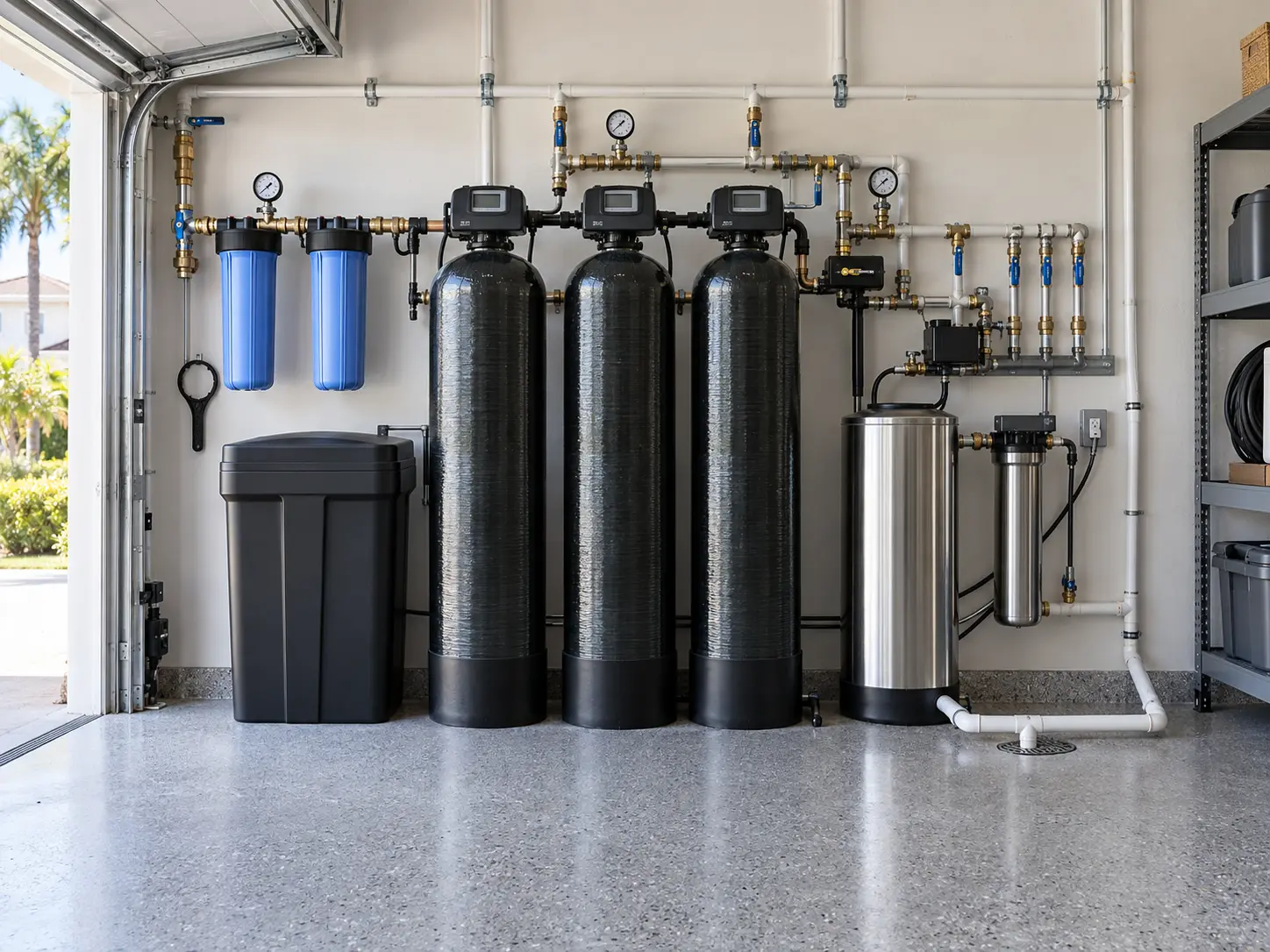
High-capacity multi-stage residential water-treatment system in a Florida garage
Independent referral guidanceEquipment shown is generic and unbranded.
Best suited forPrivate-well sediment, hardness, iron, odor or lab findings
Responsible first stepBegin with representative laboratory results and well flow
Planning range$3,000–$12,000+
Local ruleConfirm the Coral Springs provider first

The direct answer

Is well water treatment worth considering?

Plan well-water treatment around laboratory results, flow testing, equipment sequence, and retesting. The right choice depends on a clearly defined household goal, the exact utility or well source, relevant measurements, peak flow, installation access, and a maintenance plan the owner can realistically follow.

Coral Springs contains four provider areas: the City of Coral Springs, Coral Springs Improvement District, North Springs Improvement District, and Royal Water Works. The city name alone does not identify the source or treatment serving an address. Check the utility bill before applying a public report or selecting equipment.

01

Understand the option

Private wells require site-specific evidence

A private well is its own source and cannot be characterized by a nearby municipal report. Depth, aquifer, casing condition, pump performance, storage, plumbing, landscape activity, flooding, and neighboring land uses can affect results. Treatment should follow representative sampling and a review of the well system. A salesperson’s vial demonstration is not a substitute for certified laboratory analysis when health-related or complex parameters are involved.

What should a Coral Springs homeowner verify?

Ask the provider to connect this recommendation to your actual water provider, measured conditions, peak household demand, plumbing access, equipment specification, maintenance schedule, and written exclusions. A technology is useful only when the proposed configuration addresses a defined goal at the home’s real flow rate.

02

Understand the option

Common treatment objectives

Well owners may investigate sediment, hardness, iron, manganese, sulfur odors, color, acidity, salinity, or microbiological findings. Each calls for different confirmation and treatment. Oxidation and filtration may be used for certain iron or sulfur conditions; softening can address hardness and limited dissolved iron within equipment specifications; neutralizing media can raise low pH; disinfection systems require pretreatment and monitoring. No standard stack is right for every well.

What should a Coral Springs homeowner verify?

Ask the provider to connect this recommendation to your actual water provider, measured conditions, peak household demand, plumbing access, equipment specification, maintenance schedule, and written exclusions. A technology is useful only when the proposed configuration addresses a defined goal at the home’s real flow rate.

03

Plan the system

Testing and flow evaluation

A useful design needs both water chemistry and hydraulics. The well and pump must supply the backwash flow required by selected equipment without unacceptable pressure loss. Samples should be collected before existing treatment when characterizing raw water and after treatment when verifying performance. Some parameters change with aeration or time, so collection and preservation matter. Repeated or seasonal testing may be appropriate when conditions fluctuate.

What should a Coral Springs homeowner verify?

Ask the provider to connect this recommendation to your actual water provider, measured conditions, peak household demand, plumbing access, equipment specification, maintenance schedule, and written exclusions. A technology is useful only when the proposed configuration addresses a defined goal at the home’s real flow rate.

04

Plan the system

Equipment order matters

Treatment stages interact. Sediment can foul valves and UV sleeves. Hardness and iron can scale membranes. Oxidation can create particles that require filtration. Carbon can remove disinfectant residual before downstream plumbing, changing the need for hygiene and maintenance. The professional should diagram the sequence, explain each stage, show drain and power needs, and identify what happens during backwash or power loss.

What should a Coral Springs homeowner verify?

Ask the provider to connect this recommendation to your actual water provider, measured conditions, peak household demand, plumbing access, equipment specification, maintenance schedule, and written exclusions. A technology is useful only when the proposed configuration addresses a defined goal at the home’s real flow rate.

05

Plan the system

Disinfection and health-related concerns

Microbiological contamination, flood exposure, or a damaged well should be addressed using appropriate public-health and well-professional guidance. UV systems need adequate pretreatment, verified dose conditions, clean sleeves, lamp replacement, and power monitoring. Chlorination requires controlled contact time and management. This referral site does not diagnose safety or prescribe treatment; it connects homeowners with providers who can coordinate testing and equipment discussions.

What should a Coral Springs homeowner verify?

Ask the provider to connect this recommendation to your actual water provider, measured conditions, peak household demand, plumbing access, equipment specification, maintenance schedule, and written exclusions. A technology is useful only when the proposed configuration addresses a defined goal at the home’s real flow rate.

06

Compare the proposal

Maintenance and retesting

Well systems need recurring attention. Filters load, media exhausts, injectors clog, solution tanks empty, lamps age, and backwash settings drift. Owners should receive a written schedule and know which performance indicators to check. Retesting after treatment confirms whether the target was addressed, while periodic raw-water testing helps reveal source changes. Keep laboratory reports, equipment settings, service notes, and well records together.

What should a Coral Springs homeowner verify?

Ask the provider to connect this recommendation to your actual water provider, measured conditions, peak household demand, plumbing access, equipment specification, maintenance schedule, and written exclusions. A technology is useful only when the proposed configuration addresses a defined goal at the home’s real flow rate.

07

Compare the proposal

Cost drivers for well projects

Installed pricing varies with measured water conditions, flow demand, plumbing access, drain and electrical requirements, equipment certification, valve capacity, media volume, warranty, and permit or code considerations. A compact point-of-use unit can cost hundreds of dollars; complete whole-home projects commonly move into the thousands. Those broad planning ranges are not quotes. Written proposals should separate equipment, installation, consumables, ongoing service, and optional upgrades so homeowners can compare total ownership cost.

What should a Coral Springs homeowner verify?

Ask the provider to connect this recommendation to your actual water provider, measured conditions, peak household demand, plumbing access, equipment specification, maintenance schedule, and written exclusions. A technology is useful only when the proposed configuration addresses a defined goal at the home’s real flow rate.

08

Compare the proposal

A careful design process

A responsible project begins with the address and water provider, followed by an on-site conversation about symptoms and priorities. A professional may measure hardness, disinfectant residual, pH, total dissolved solids, iron, or other parameters relevant to the source and proposed equipment. The next steps are equipment sizing, a plumbing and drain review, a written scope, installation, startup, verification for leaks and proper regeneration or flushing, and owner instruction. Sampling should guide selection; sales demonstrations should not be treated as a medical or safety diagnosis.

What should a Coral Springs homeowner verify?

Ask the provider to connect this recommendation to your actual water provider, measured conditions, peak household demand, plumbing access, equipment specification, maintenance schedule, and written exclusions. A technology is useful only when the proposed configuration addresses a defined goal at the home’s real flow rate.

Coral Springs context

Local conditions change the installation conversation.

Homes near University Drive, Coral Ridge Drive, Wiles Road, Sample Road, Atlantic Boulevard, Riverside Drive, and Royal Palm Boulevard may sit in different provider areas. Neighborhood references such as Ramblewood, Maplewood, Eagle Trace, Heron Bay, and the Country Club area help describe service geography, but the utility bill and official district information remain the reliable evidence.

Garage and side-yard installations should account for the main-water entry, drain access, electrical needs, vehicle clearance, sunlight, rain, irrigation spray, storm exposure, landscaping, and future service space. Visible exterior equipment may also involve HOA requirements, permits, or code considerations that the actual provider must confirm.

Read the Coral Springs water district guide →

Before comparing proposals

  1. Confirm the exact provider or private well.
  2. Write down the symptom and desired outcome.
  3. Measure the parameters relevant to that decision.
  4. Document pipe size, pressure, peak demand and installation access.
  5. Compare equipment, settings, maintenance, warranty and exclusions in writing.

Frequently asked questions

Well Water Treatment: practical answers

Well Water Treatment questions from Coral Springs homeowners

Can I choose equipment from my ZIP code alone?

No. Coral Springs has four water-provider areas, and even the correct utility report does not replace testing at the property when equipment sizing depends on current conditions.

Does this mean Coral Springs tap water is unsafe?

No. The City’s 2025 report states that its drinking water met federal and state requirements. Home treatment is often considered for taste, scale, appliance protection, or point-of-use preferences.

Do you install equipment?

Coral Springs Water Filtration is an independent referral and information service. We connect requests with an independent provider; we do not perform installation or testing ourselves.

What should I compare in proposals?

Compare the treatment objective, test basis, equipment model and certification, flow rating, installation scope, maintenance, consumables, warranty, and total ownership cost.

A clearer next step

Discuss well water treatment for your Coral Springs home.

Share your provider, symptoms, household demand, existing equipment, and installation location. An independent provider may follow up to discuss testing and practical options.

Request a Water Conversation →
Call 000-000-0000